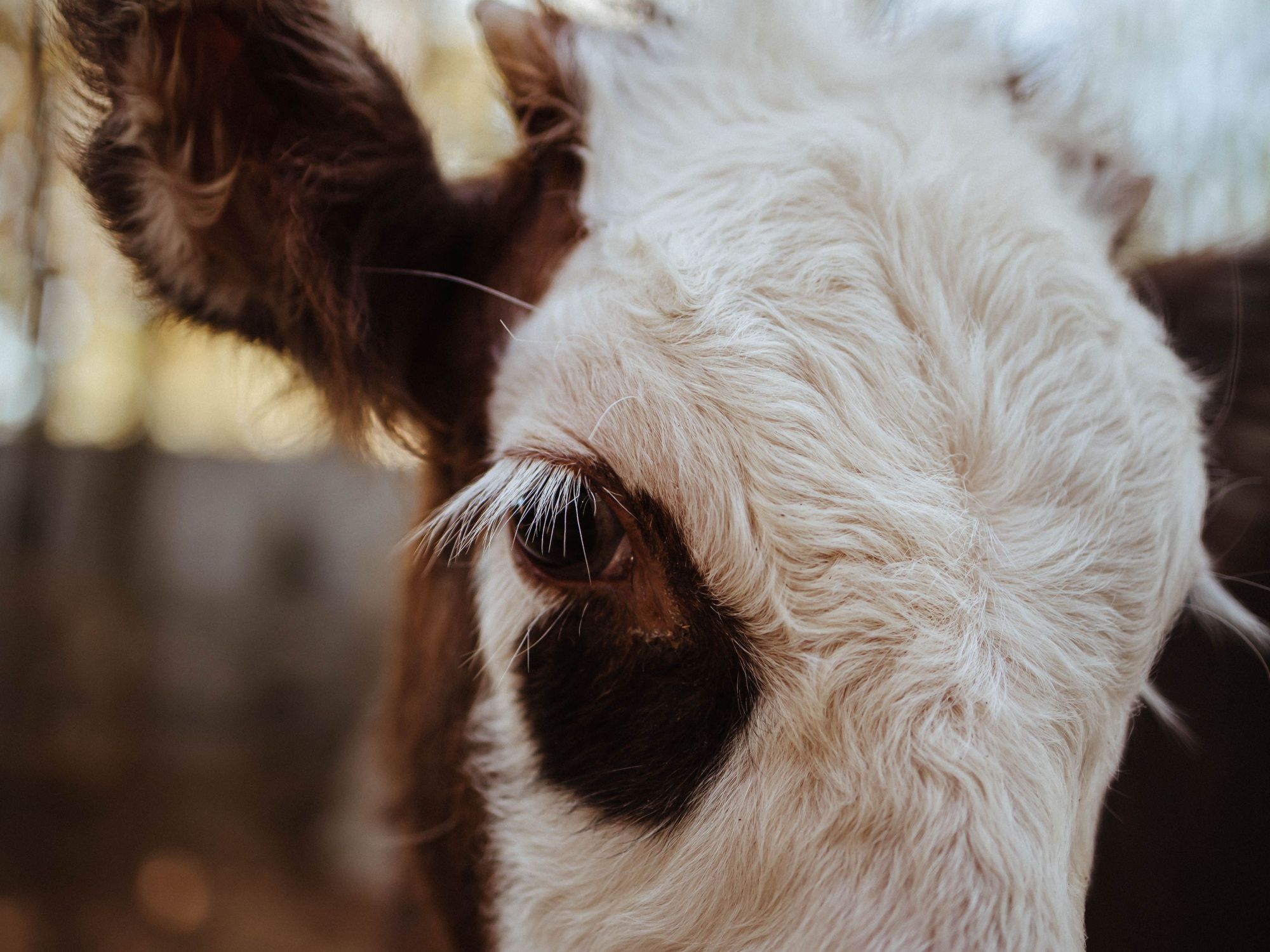
You can purchase “Veal” for $2.99 on
Amazon – B&N – KOBO – Google Play Books
Thanks for reading!
Veal
by Antwan Crump
Some called me satanic.
Others called me a fraud.
I was a blessing in certain circles—one of two chosen calves destined to bear eternal fruit. To carry the weight of our ancestral legacy. To dispel evils and wield the sight.
“Kwame… Nye… Nih… Um.” The small woman stuttered. “Sorry, how do you…?”
“Nyong’o,” I said. “Neon-GO.” Close enough. “It’s hard on the Western tongue.”
“I see.” She smiled and held her stare. “Handsome name for a handsome man.”
I smiled back, an upward scowl—my natural state. “I don’t like compliments.”
“Noted.” She looked away, cleared her throat, then went back to prying. “Let’s move on.”
I’d been to therapy before. It was usually the same baseline of performative empathy and presumed conclusions. Rough childhood? Neglectful parents? Drugs and alcohol? Dysmorphia? A simmering need to suck a cock or wear my mother’s clothes? No. No. No. No. Not in any way I’m aware of. We blazed through the list of usual suspects and arrived where it always does.
“How are you sleeping?”
“No worse than usual.”
“What’s the usual?”
“An hour or two.”
“A night?”
“Depends.”
The dreams started a year prior. I was a few weeks into training. The seizures began two years before that, after a close call with pneumonia. I graduated from high school while crapping out apple sauce beside a ventilator. We traded the milestone photos and fine dining dinner for cheap takeout and family stories. It sounds sad, but we were together. My father said that’s what mattered.
“Dreams,” she asked.
“Literal or figurative?”
A giggle. “Do you dream when you sleep?”
“Yes.” The words escaped without permission. “Always.”
My mother flew Uncle Mosi out after I fell into a two-week coma. He shook some shells, sang in tongues, and scared the hell out of everyone. I woke up later that night, happy, healthy, and hungry enough to eat my own ass. The doctors were shocked. I was so sick they’d made other plans for my organs. The milky woman nibbled the tip of her pen and perused my subject file.
“What do you dream about?” She was genuinely curious. “If you don’t mind me asking.”
“Everything.” Birth. Life. Death. Past. Present. Future. “Too much.”
The dreams started as flickers, like flashes of disordered stills from negative film. They evolved into colorless scenes that played like TikTok through shattered glass. By then, they were clear as recent memory. Dizzy and unfocused but decodable with practice. I wasn’t quite there yet, still in training—learning the ways of old and mystic.
The small brunette smiled. “Let’s try some word association. First, I’ll—”
“I know what it is,” I interrupted and glanced at the clock. Then back. “After you.”
“Sun.”
“Light.”
“Light.”
“Dark.”
“Life.”
“Death.”
“Death.”
“Life.”
“End.”
“Beginning.”
“Love.”
“Family.”
“Family.”
“Life.”
It was a standard evaluation.
A basic intake. Nothing special.
***
I wasn’t allowed to drive.
Not until I’d gone six months seizure-free.
Instead of the Dodge Charger I’d been saving for, my transport was the city bus—a bright blue porta-potty that stopped every block and smelled like piss-wet carpet. The ride home was about an hour, but that’s not where I was going. It was a weekday. That meant I had certain duties to fulfill.
“It’s about time,” Uncle Mosi said. “We’ve already started.”
“How does that work?” I stepped inside. “Got backups?”
“You are never my only option.” He shut the door. “Twende.”
Mosi was in his usual garb, a shuka, some beads, and clown white powder—unevenly caked from the receding curve of his greying dreads to a skeletal waistline. His street clothes were no less flamboyant—neon suits with eye-bleeding patterns and dress shirts with oversized collars.
He owned two properties in the city. The one he slept in was a three-story townhome off the coast of Staten Island. He lucked into a deal after the former owner passed and left it to his negligent children. They hated the place. Bad memories. He paid cash after meeting the spirits. They liked him.
“It smells like ass,” I said. “Can you light a candle?”
“That smell is sacred,” Mosi shot. “Come, heathen. Sit.”
His second property, this shack, was a rundown shotgun home on the brighter side of Brooklyn. The once gentrifiers saw fit to ‘de-gentrify’ and made a point of soliciting immigrants. Mosi made an offer after freeing the ghosts and called it our portal to everything.
“Tell me your dreams,” he said, crossing his legs. “Connect them.”
“Starting from the barn?” I went to my usual place in the living room, beside a scattered blend of poultry bones, mixed soils, and trinkets twice my age. “Not much to tell.” I liked to test him. “Freddy Krueger popped out from a bale of wheat and asked about my barber. Then he offered me a free cut. He was slashing throats and prices.”
“Ah, the field again,” Mosi said, humming and chanting. “…mm-hmm…”
The room was filled with heirlooms stacked on family shelves he’d shipped from the motherland. The flooring was destroyed, revealing the black-molded infrastructure beneath. The windows bore foreclosure signs that hung from splintered plywood. The roof was brittle. The walls were gashed. The lights didn’t work. Mosi’s Porsche was parked outside, tucked beneath a Gucci cover.
“—and then what,” he asked, peeking with a single eye. “…mmm…”
“Batman and Blade swooped in and invited me to Disneyland.”
“…uh-hmm…” Mosi hummed. “Dark nights. Bright lights. Then?”
“I killed the calf.” That fucking Jedi. How did he always know?
“Ah,” the humming ceased. “There you are. Welcome, cub.”
The dream was always the same. I would wake up in a field of wheat while suns and moons swirled overhead. The garish light was thick as paint and graced the amber grains with sultry shades that sifted through the plains. It’d lead me to a barn on the far horizon. I’d follow. Weeping. Vomiting. Wielding a blade made of heat-treated bone. Horn? Tooth? Tibia? I didn’t know. But I killed with it. I murdered a baby cow.
“I could feel it this time,” I said.
“You felt the blade? Gripped it?”
“Yeah.” I sat and crossed my legs. “I know its weight.”
“Can you recall it precisely?” Mosi said. “To the gram?”
“Yes.” I nodded. “Better than my keys.”
“Show me.” Mosi reached for a wooden box and popped it open. “Choose.”
The oak chest had gold writing on its face. The wood was worn, dulled smooth by centuries of trial and error. Inside it was a fur-stuffed pillow cased in purple velvet lining.
There were three knives fixed in place by rusty clamps hand-drilled into its base. A jagged metal razor, reddened and corroded by time and excessive use. An ivory scalpel, filed to a point and wrapped in twine. The third was a horn tip, browned by dust, time, and decalcification.
Mosi closed his eyes and hummed.
I picked the horn and twirled it through my fingers. “This one.”
“Are you sure?” Mosi leaned forward, testing. “No takebacks.”
“I’m sure.” It was the blade from my dreams, older but the same. Never used. “It’s this one.”
A smile yanked at Mosi’s cheeks. He locked the box and returned it to its shelf. “Very good, Kwame. You’re getting stronger. We’ll make a guide out of you, yet.” Mosi stood and lit a fire. Police sirens rose and fell to silence. “Get ready. We have much to do.”
Three hours of dance and chants.
My feet were leather anvils.
***
We wiped off the clumps of moistened powder, then Mosi took me home. He’d drop me off out front and rarely entered the brownstone. That was my father’s request. They didn’t get along, another consequence of my grandfather’s messy affairs.
There were scores of would-be heirs seeking their stake in the family fortune. As the oldest legitimate child, Mosi made those shrewd decisions. He felt entitled to lecture anyone who’d asked him for a cent. My father knocked him out cold in the hospital after curt remarks about how we’d been raised. They avoided each other for our sake. It was either avoidance or death. The peace was tenuous at best.
“He’s home,” my mother announced from the kitchen. “How did it go?”
“Fine,” I said. “I chose a blade.”
“Which one?” My father’s voice billowed from the open lips of a book. “Don’t say ivory.”
“Bone,” I corrected. “Rawhide handle.”
“Interesting.” He flipped a page. “How are you feeling?”
“Never better,” I said and mounted the stairs. “Going to wash up before dinner.”
My father was chotara, too. A mixed breed, like my sister and me. My mother was a third-generation pureblood but had long lost her ties to the tribes. She met my father in college, during an attempt to reconnect with her heritage.
She dropped African Studies after the teacher’s aide, now husband, invited her out for coffee. I was born a year later. They married while I grew in her belly. She homeschooled my little sister while my father ran the family business. Accounting.
“Check on Nai,” my mother said. “Tell her twenty minutes.”
“Yes, ma’am.”
Danai was five years younger and suffering from a familiar set of symptoms. Nausea. Vomiting. Vivid dreams. Insomnia. She’d even begun to have seizures of her own. Mosi did what he could, but couldn’t help us both at once. It was against the sacred unwritten rules that kept shadows at bay. Her ukuthwasa would come the following summer, during our yearly trip overseas. We’d watch her closely until then. Mostly me.
“Danai.” I knocked on her door. “Dinner in ten.” No answer. “Danai?” I respected her personal space, but closed doors were becoming a problem. Seizures were dangerous enough on their own; they didn’t need a bodyguard to shield them. “Danai!” I gripped the doorknob. Locked. “I’m coming!” I stepped back and aimed my shoulder. Then once more, with feeling. “DANAI!”
The door flew open.
“Jesus!” She said it like I were the child. “I’m praying. Learn to knock!”
I calmed and stood straight. “I did knock. Three times.”
“Then learn to wait, demon,” she said. “What?”
Danai was built like an unbent paperclip with hair twists that reached her knees. She rarely wore street clothes and preferred to dress comfortably. T-shirts. Pajama bottoms. A greasy headscarf. She’d had trending tops and fancy shoes, but saved them for special occasions, usually events with boys she’d liked. The seizures largely killed that bit of fun, but she managed when able. No teen girl wants to be homeschooled and thought of as a shut-in. One was weird. Both was crazy—lifelong fleas to shake.
“Dinnertime,” I said. “Wash your ass.”
“Smell yourself.” She flicked the air. “Filth.”
“Sacred filth.” I peeked into the room. “You’re a mess.”
Due to the circumstances, our parents were lenient about Danai’s bedroom hygiene, viewing the space as a limited outlet for natural rebellion and self-expression. That expression was disgusting: trinkets and heirlooms, books and pamphlets, clothing piled in corners like load-bearing beams. Incense burning on mounds of worm-ridden soil… it was gross.
“Who are you talking to?” I said.
“I don’t know,” Danai answered, sweating. “I listen when they tell me to do things. Today, it was this.” She turned away and opened a window. “Congratulations, by the way. Baba was afraid you’d choose ivory. The cow horn is better. Sharper. You’ll want it sharp.”
“For what?”
“I don’t know…” She shrugged and blew out a candle. “—your ass?” Danai had visions, too. Clearer than I. Purer than Mosi. We ate dinner together—as a family. As always.
After that, I was back on the streets.
***
I didn’t work. Not officially.
Most of my attempts were futile.
My first job was at the local theater, sweeping popcorn and checking tickets. It was fine until I got sick. The manager relieved me of duty due to a “sudden restructuring.” He recommended disability checks, but my father forbade the crutch. I was able enough, and we weren’t poor. Despite this, Baba was frugal with his money. It was painful to beg. So I didn’t.
“Do they have cash?” I asked. “No more credit. No more favors.”
“They do,” Curtis said and flicked a lighter. “At worst, you’ll get a blowjob.”
“No,” I protested. “I don’t need that kind of payment.”
“Relax, Rafiki,” he smiled and puffed the joint. “They’re good for it.”
My second job was off-book. It began with a simple request to purify spirits from a storage unit. The ‘specters’ were rats—feasting on cured meat from a broken container. Some sage, showmanship, and traps, and Ms. Johannsen was satisfied.
Five hundred dollars later, I was in business. Curtis, an old friend, saw himself as my manager. I’d cut him in to expand my reach and keep my name clean. He’d gained forty pounds since the start of our arrangement—salt and sugar. No muscle.
“They’ve already sent half, CashApp,” Curtis said and stopped at a stoop.
“Then where is it?” I poked his left breast. “Where is my money, Curtis?”
“Easy.” He raised his hands, sticky fingers in forfeit. “It hasn’t cleared yet.”
“You lie like a rug.” I turned and walked away. “Good luck.”
“Wait…wait…wait…” he rushed, fiddling with his phone. “Sent.”
I checked the app and saw the balance. “Was that so hard?”
“It just cleared.” Another lying smile. “Must be that sixth sense of yours.”
“Sure…”
The home was simple: repainted outside, solar panels on the roof, and a small front yard with thornless roses. Curtis picked me up after dinner, and we drove to Queens to assist our latest client. He was an old man suffering from incontinence and scattered memory. His granddaughter, around my mother’s age, was desperate to find his will before he passed.
“So, we just need to look,” I prodded as Curtis rang the doorbell. “Piece of cake.”
“You haven’t seen the pictures, have you?”
“What pictures?”
I did not need the pictures. His meaning was clear when Ms. Tillis opened the door. There were mounds of files, newspapers, dirty dishes, and random bags of trash. Some ripped open, and others tied tight enough to bounce like a ball. It was the kind of mess that dims the lights—an unclean home for unwell souls. I thought of Danai, then proceeded inside.
“Thank you for coming,” she said, dressed in a maroon and orange gown with flower patterns and a matching headdress. She extended a welcoming hand. “I’m Sarah.”
I shook. “Kwame.”
Then the clown. “Curtis.”
Sarah led us upstairs. It was more of the same. A smelly trail of clothes, shoes, and various wastes smeared across the carpet. Her grandfather’s room was on the far side of the home, down a hall of wilting pictures and ancestral artwork. I’d seen the artwork before—both in reality and the depths of my dreams. That was common. I recognized most things.
“How can I help?” I asked as we arrived at the open bedroom door. “What do you need?”
Sarah peeked into the room, then back at me. “I want you to free him.”
It was best to be clear. “From?”
“This,” she said. “End his suffering.”
“That is neither my choice nor my way,” I said. “I don’t—”
“Please.” Sarah hugged me. Her tears dampened my chest. “Please release him.”
“I cannot do that.” I pried her off and held her shoulders. “But I can plead for his peace.”
Mosi would warn me not to tempt the spirits at this stage of my training. It was an avoidable threat. Most of my clients had hidden agendas beneath their mask of fragility. This one was different. She scoffed at our offer to search for the will. It was a lie, she confessed. The will was never lost. She wanted this man to move on. To be free of the pain.
I couldn’t blame her. He was bedridden.
“Hot!” The old man woke with a start, flailing as if on fire. “Sarah,” he cried as he soiled himself. “It’s hot, Sarah! Help me!” The birds beside his window fled their tree, exposing its dying branches—false blooms from a doomed harvest. “Sarah!”
The room was cluttered with bags and luggage, as if they’d join him in death. The white paint was browned by decades of nicotine and aesthetic neglect. The old man survived with the help of an oxygen mask and a feeding tube in his side.
“Sarah,” he screamed like a child. “Hot!”
“It’s okay.” I held his hands. Dirty fingernails stabbed my skin. “Be still.”
“Hot!” He spoke the word through shivers. “Are you here to kill me?”
“No,” I said. “I am Kwame. Sarah asked me to help you.”
“Please.” He trembled and tightened his grip until I bled. “Release me.”
I cleared a space beside the bed and lit some sage to cleanse the air. The old man couldn’t sit up straight, so I knelt to see his eyes. They were dark and tired, witnesses to the weight of a poorly lived lifetime—ready to leave this world—their shadows cast far beyond their light.
I stared into his eyes. Then into him.
“Picture your blessings.” I waved my hands over his body, filtering his sick air through my lungs. “Picture the beginning.” His lips curled over his teeth. His arms shook wildly. I gripped the burning sage and scattered its ashes over his body. “We are sparks reborn from the dirt—” Sarah watched from the bedroom door as Curtis held her steady. “…purified by the fire.” I hummed Mosi’s song. “…ignited by the ash.”
The old man’s bones shifted beneath his skin, mounting waves of rabid tremors that made his brittle body crack. His eyes stayed open, glimmering crimson light as weak molars bled from the pressure of his fleshy bite. This man bore evil, a withering malevolence evading fate’s final decision.
I summoned forth the all-knowing.
“Go now, shadow. Be free of this shell and with consequence.”
The violent trembling stopped. The old man took his last breath as eternity judged his soul…and damned it.
“Thank you.” Sarah collapsed. Unconscious.
Freed of the burden.
We left before she woke up.
If you enjoyed this snippet, you can purchase the full story for $2.99 on
Amazon – B&N – KOBO – Google Play Books
Kwame Nyong’o is trapped between worlds…
In the streets of New York, he faces the harsh, material realities of a modern city. However, in his blood lies an ancient duty: a spiritual calling passed down through generations, marked by vivid visions, recurring dreams, and violent seizures. Under the demanding guidance of his eccentric Uncle Mosi, Kwame is trained to navigate his visions and wield the tools of his ancestral mantle… but legacy doesn’t pay the bills.
***SPOILERS***
Desperate to ease his family’s mounting financial and medical burdens, Kwame uses his gifts for profit—the consequences are swift and profound. As supernatural forces threaten to destroy his life, Kwame must expel his demons while paying the price for warping his soul.
From the author of Apostate, Butterflies, and The Suicide Pod, Veal explores the intersection of the modern and the ancient, weaving an intense and unforgettable narrative that’s sure to leave a scar. For fans of Black Mirror, urban fantasy, and psychological horror.


8 thoughts on “Veal (Short Story)”